


Coastal marine foundations face demands that most inland projects never encounter. Soft marine soils, wave loading, vessel impact, and salt water acting on the structure over decades all add up to an engineering design environment where pile selection matters more than usual. Steel pipe pile has become the default choice for bridges, piers, port structures, and waterfront facilities, because it handles each of those demands well.
What Makes Pipe Pile Well Suited to Coastal Foundation Design
Coastal marine foundations carry both vertical loads from the structure above and horizontal loads from waves, currents, and vessel impacts. In many marine projects, horizontal load capacity governs the design rather than vertical capacity. Steel pipe pile handles both well because its round closed cross-section spreads bending stress evenly around the section. That shape gives it high moment capacity relative to weight. That's why pipe pile shows up in structures that must resist tidal movement or mooring forces.
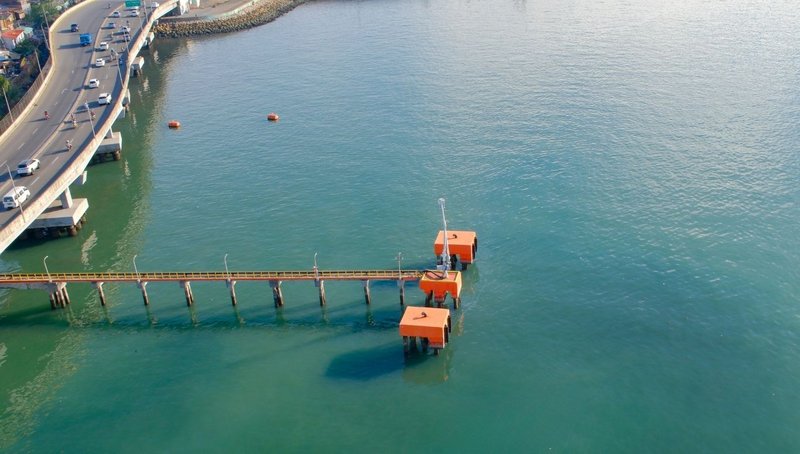
In certain marine soils, skin friction along the shaft carries most of the load when end bearing runs short. Steel pipe also splices in the field to reach whatever depth real conditions require. Unlike most concrete options, pipe pile handles variable ground without a full redesign when field conditions differ from the plan. For further reference on driven pile foundations in marine environments, the Federal Highway Administration has published detailed design guidance from major coastal construction projects.
Coastal Design Demands: Scour, Corrosion, and Lateral Loading
Scour is one of the most serious concerns in coastal and waterway foundation design. When water flow strips material from around the base of a pile, the embedded depth drops. That lateral load resistance loss can compromise the foundation's load capacity quickly. For that reason, coastal foundations need deeper embedment than vertical load calculations alone would suggest. Pile selection must also account for bending and moment capacity at greater unbraced lengths.
Corrosion is another long-term issue in marine settings. Steel pipe piling provides long life expectancy through protective coatings, additional sacrificial steel wall thickness, mariner specialized steel and cathodic protection systems. All approaches are well established in marine construction practice, and the Design of Pile Foundations manual from the US Army Corps of Engineers covers corrosion protection strategies alongside broader pile design guidance.
Additionally, the American Society for Testing and Materials (ASTM) A252 specification governs steel pipe piles for structural foundation use. It covers three grades: Grade 2 for standard work, Grade 3 for high-load conditions, and Grade 3/Modified where demands exceed base Grade 3 thresholds. Grade selection affects both structural capacity and performance under the combined loads common in coastal work.
Specifying Steel Pipe Pile for Coastal and Marine Projects
Coastal and marine projects place specific demands on pile procurement that inland projects typically don't. Deeper embedment often calls for larger diameters and greater wall thicknesses. Lead times on large-diameter sections affect schedules, so early supplier engagement matters on waterfront projects.
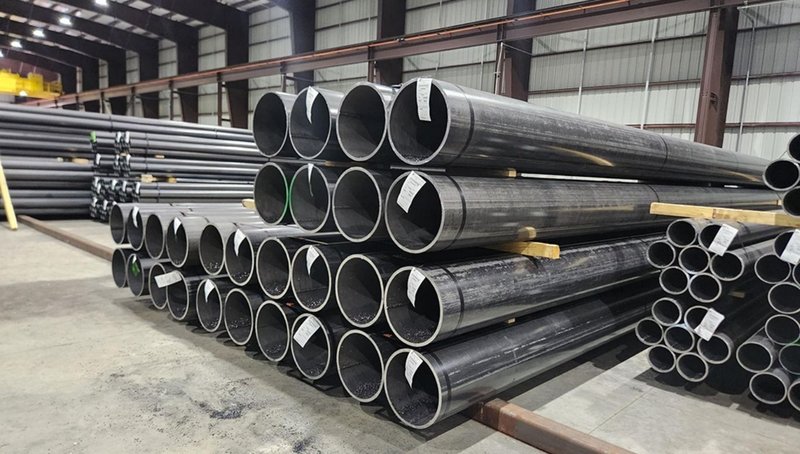
Bull Moose Tube produces steel pipe pile to ASTM A252 in Grade 2, Grade 3, and Grade 3/Modified. Available sizes run from 5.563 inches to 18 inches in outside diameter, with wall thicknesses from 0.188 inches to 0.750 inches and lengths to 80 feet. Moreover, seven domestic manufacturing facilities give Bull Moose the reach to reliably supply coastal projects across multiple regions. Structural work on coastal pile design depends on accurate section data. Bull Moose's technical documentation covers the full range of pipe piling properties, yield strengths, diameters and wall thicknesses, which supports engineering design calculations for axial and lateral load analysis and design.
If your coastal or marine project calls for steel pipe pile, get in touch with us. Bull Moose can confirm grade and size availability, review load requirements, and help build a procurement schedule that fits your construction timeline.