


Traditional data center construction takes 18 to 24 months from groundbreaking to operational capacity. Hyperscale operators, colocation providers, and enterprise IT teams rarely have that kind of runway anymore. Modular data center design solves that problem by moving fabrication work to factory environments. Structural steel systems are central to why it works.
Modular design builds infrastructure in prefabricated modules. Power, cooling, and IT enclosures arrive on site ready for installation. Rather than constructing every system at the project site, modular design moves work offsite. Quality is more consistent in factory environments. In addition, labor becomes more efficient while schedules turn more predictable. The result is faster deployment, lower construction risk, and the ability to scale capacity in increments as demand grows.
Why Hollow Structural Sections Suit Modular Data Center Design
A data center module frame carries significant load. As a result, cooling systems, power distribution units, uninterruptible power supplies, and cable management all add weight. However, the structure must support that load without deflecting in ways that compromise equipment clearances or connections.
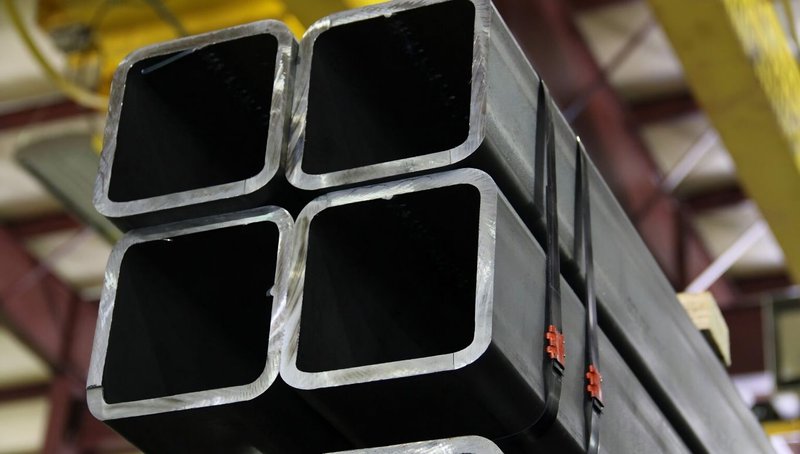
Hollow structural sections (HSS) suit modular data center design for several reasons. Their closed geometry handles axial and torsional loads efficiently. That matters in a module frame that gets lifted, transported, and repositioned before permanent installation. Square and rectangular HSS also provide flat surfaces that simplify connection design and fabrication. In modular frames, where bolted interfaces are preferred for rapid assembly and installation, these characteristics support efficient and repeatable connections.
Parallel Workstreams Compress the Schedule
Traditional data center construction runs sequential trades on a single site. One team finishes before the next begins. Modular design breaks that dependency. Site preparation and module fabrication run at the same time. When the site is ready, modules arrive and installation begins immediately. That parallel approach is what compresses project schedules.
Meanwhile, scalability reinforces the schedule advantage. A modular data center built for 2 megawatts of IT load expands to 4 or 6 megawatts by adding modules. Each module is a self-contained increment of capacity. HSS support that approach through dimensional consistency, compatibility with prefabricated connection design, and broad availability across sizes.
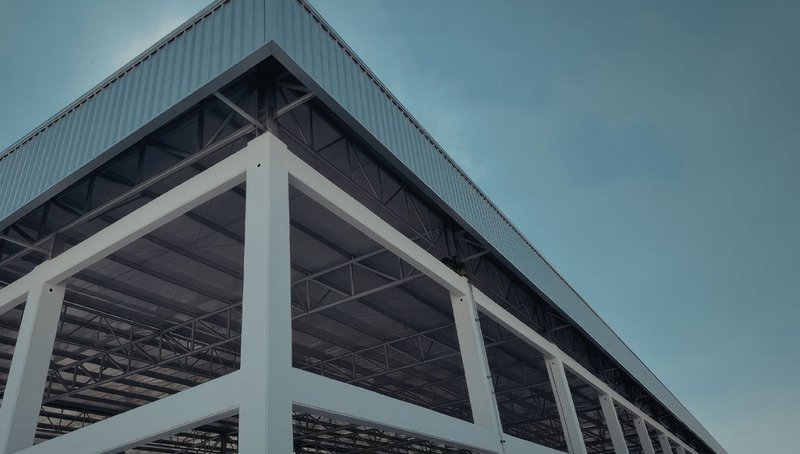
AI workloads and cloud demand are pushing operators to add capacity faster than traditional construction allows. For those operators, deploying on a predictable schedule is as valuable as the initial build.
Material Performance in a Continuous-Operation Environment
A well-designed data center must support continuous operation with minimal tolerance for structural variability. The framing system is expected to perform reliably over a service life measured in decades, with minimal maintenance beyond routine inspection. Structural steel members are well suited to these demands. Under the temperature ranges typical of data center environments, they exhibit negligible creep under sustained load, and their mechanical properties remain stable and predictable. The uniform geometry of HSS further supports this consistency by reducing variability in member behavior across repeated modular units.
Bull Moose Tube manufactures HSS suited to modular data center design applications. Production capacity supports large-scale deployment programs across North America. To discuss HSS solutions for your next data center project, contact Bull Moose Tube.