

A fire sprinkler system in a large commercial or institutional building is a life-safety assembly. The pipes must perform under pressure, resist corrosion over decades of service, and meet applicable code requirements. Selecting the right fire sprinkler pipe starts with understanding what those requirements actually demand.
Buildings such as office towers, hotels, hospitals, and assembly facilities each impose specific demands on fire protection systems. Building occupancy, hazard classification, ceiling height, and water supply characteristics all influence system design. In turn, each of those variables connects back to pipe material, diameter, wall thickness, and joining method.
NFPA 13 and the Pipe Specification Framework
The National Fire Protection Association's NFPA 13: Standard for the Installation of Sprinkler Systems defines acceptable pipe materials and installation requirements for wet, dry, preaction, and deluge systems. Steel pipe standards listed under NFPA 13 include ASTM A795, which is written specifically for fire protection applications, ASTM A135, which covers electric-resistance-welded (ERW) pipe, and ASTM A53, a general-purpose pressure pipe standard. All three are acceptable for NFPA 13 systems when appropriately listed and approved.
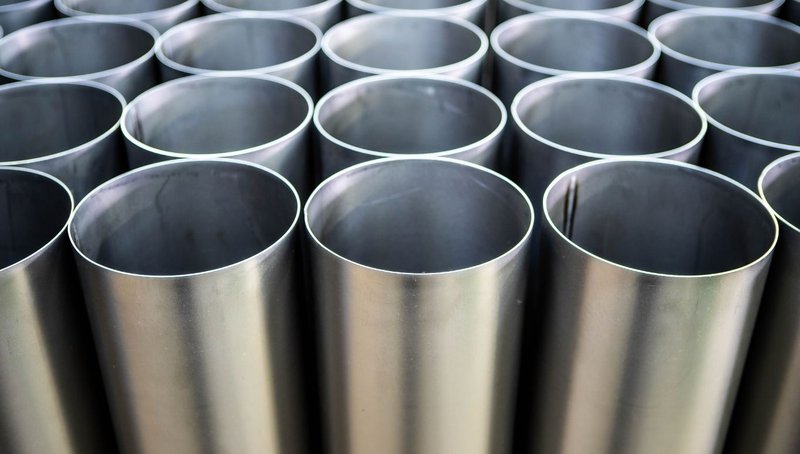
For most commercial applications, steel pipe is the standard choice. It handles the working pressures typical of commercial sprinkler systems and supports grooved, threaded, and welded joining methods. Its strength and dimensional consistency also provides better hydraulic calculations. Those calculations grow more complex as system size and occupancy hazard level increase, so consistent pipe geometry matters.
Pipe Schedule selection follows hydraulic demand. Larger buildings require longer mains and branch lines serving more heads. Undersized pipes increase friction loss and reduce residual pressure at the most remote head. In some cases, they also require a larger fire pump to meet system demand. Correct sizing at the engineering design stage avoids costly hydraulic failures during acceptance testing.
Black Steel Pipe and When to Consider Alternatives
Black steel pipe is the standard for wet pipe sprinkler systems in climate-controlled interior spaces. It performs reliably when the system remains continuously water-filled and the environment does not introduce any corrosive conditions. For large, high-occupancy buildings with stable interior environments, black steel pipe meets NFPA 13 requirements and offers a cost and more efficient profile well suited to commercial construction.
Dry pipe and preaction systems present a different corrosion environment. These systems are common in parking structures, loading docks, and unheated areas within otherwise conditioned buildings. Because the piping is filled with air or nitrogen rather than water, internal surfaces are exposed to oxygen, condensation, and repeated wet-dry cycling. This environment accelerates internal corrosion, particularly at system low points and air-to-water interfaces, when not properly designed.
For these applications, corrosion mitigation strategies should be evaluated carefully. While galvanized pipe is permitted under NFPA 13, it does not always provide superior long-term performance in dry or preaction systems. Alternatives such as nitrogen inerting systems, internally coated steel pipe, or other corrosion-resistant materials listed under NFPA 13 are commonly considered to improve system longevity.
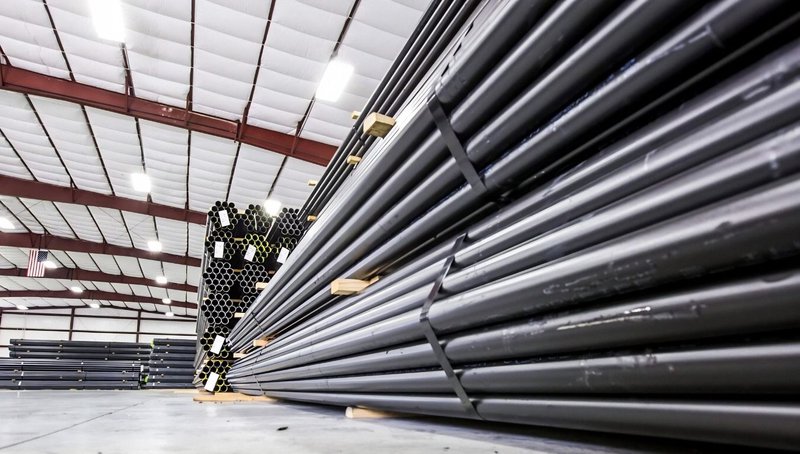
Understanding where each system type applies within a commercial building allows specifiers to match pipe selection to actual service conditions.
Fire Sprinkler Pipe Threading, Grooving, and Wall Thickness
Joining method significantly influences wall thickness requirements. Threaded connections require sufficient wall thickness to accommodate thread cutting without reducing the remaining wall below minimum values defined by applicable standards and listings. Standard-weight Schedule 40 pipe is well suited for threaded connections at the diameters typically used in branch line and cross-main applications.
Lighter-wall pipe is commonly used in roll-grooved systems, reducing weight and installation labor. Even so, wall thickness must meet groove manufacturer specifications as well as NFPA 13 listing requirements. Confirming compliance prior to procurement helps avoid rejected installations and schedule delays.
Bull Moose Tube manufactures Sprinkler Pipe to ASTM A135 and ASTM A795 in Schedule 10, Schedule 40 and other engineered configurations. That range supports system designer specifications and contractor procurement across large commercial projects. To discuss fire sprinkler pipe specifications for your next project, contact Bull Moose Tube.