


Structural engineers don't choose Hollow Structural Sections (HSS) steel tubing because it looks clean on a drawing. They choose it because the geometrical properties deliver stronger, multi-directional, and torsional load resistance that wide flange sections can’t match.
HSS steel tubing is a closed-form section. It resists forces applied from any direction without the weak-axis vulnerability inherent in wide-flange beams or channels. That closed geometry also provides high torsional stiffness, which matters in any frame carrying lateral loads, eccentric connections, or dynamic forces. For structural engineers designing columns, trusses, and long-span frames, the combination of axial, bending, and torsional resistance simplifies load path design while reducing overall material weight.
How HSS Steel Tubing Geometry Drives Load-Bearing Efficiency
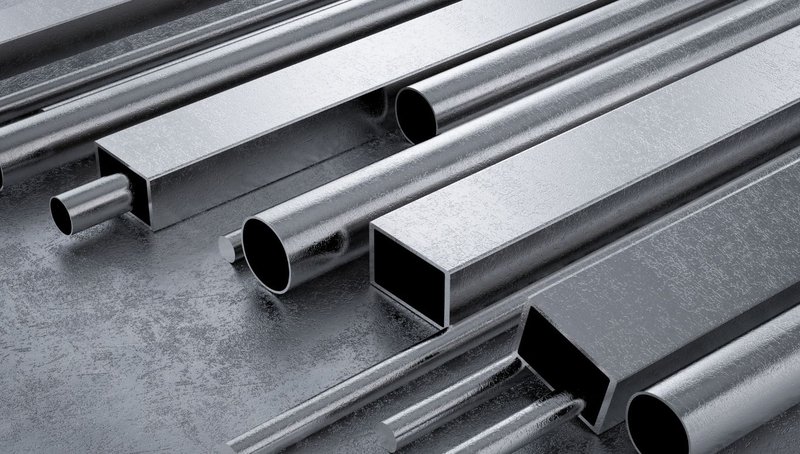
The load-bearing advantage of HSS steel tubing starts with wall uniformity. Because the material is distributed evenly around the section perimeter, round HSS delivers a consistent moment of inertia about both axes, making it highly efficient for columns in unbraced conditions, where slenderness governs design. Square HSS sections offer a biaxial balance while rectangular sections offer a higher strong-axis moment of inertia. This gives designers a geometric option when loads are directionally predictable.
The American Institute of Steel Construction Design Guide (ASC) for HSS provides detailed guidance on HSS member design, covering axial compression, combined loading, and connection detailing. The Steel Tube Institute (STI) supplements that framework with engineer-authored design manuals that translate those specifications into worked examples for section properties, column design, and connection types. Engineers working to these standards can specify HSS steel tubing with confidence, knowing published values reflect tested, manufactured product.
Square and rectangular HSS profiles offer flat bearing surfaces that simplify column base plates, beam seats, and gusset connections. Round HSS sections excel where load transfers from multiple angles or directions simultaneously, such as space frames or exposed architectural columns. Selecting the right HSS shape for a given application can increase structural efficiency as well as provide a pleasing aesthetic choice.
ASTM Standards That Underpin Structural Reliability
Load-bearing performance is only as reliable as the material behind it. HSS steel tubing manufactured to American Society for Testing and Materials (ASTM) A500 or A1085 meets defined yield strength, tensile strength, and wall thickness tolerances that structural calculations depend on.
ASTM A1085 is specified for seismic and high-performance applications. Its tighter dimensional tolerances and minimum yield-to-tensile ratio directly support the assumption of consistent section properties that buckling and bending calculations require. For engineers working in seismic zones or designing to AISC 341 seismic provisions, A1085 is often the right starting point.
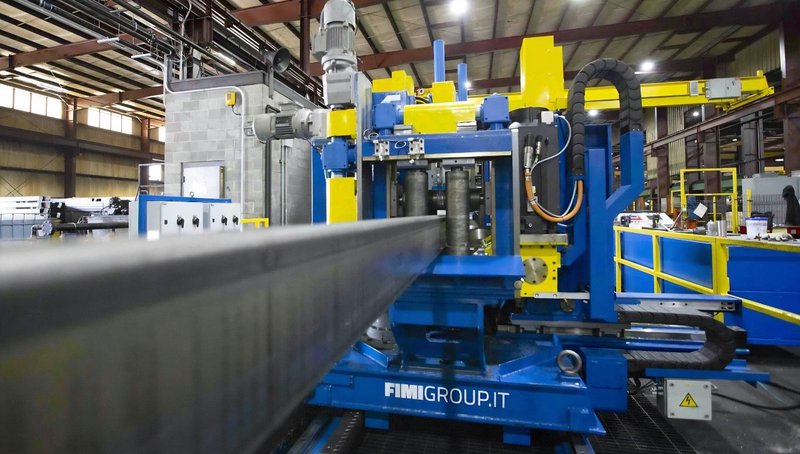
Bull Moose Tube manufactures HSS steel tubing across a broad size range to meet both ASTM A500 and A1085 requirements. Consistent quality across production runs means the section properties specified at design match and even exceed expectations when steel arrives on the jobsite, without surprises during fabrication or erection.
Applications Where HSS Outperforms Open Sections
HSS steel tubing handles compression-dominant applications particularly well. Data centers, multi-story building columns, exposed architectural frames, pedestrian bridges, and industrial rack structures all benefit from HSS geometry. In composite construction, concrete-filled HSS columns combine the compressive strength of concrete with the confinement and ductility of the steel tube, producing members with capacity well above either material alone.
Truss chord and web members are another natural fit. The closed section reduces the surface area exposed to weathering and simplifies paint or coating application, lowering long-term maintenance costs alongside the structural benefits.
Specifiers who understand these load-bearing characteristics build more efficient and cost-effective structures. Those who default to open sections for every application leave weight, cost, and performance on the table.
To discuss HSS steel tubing specifications for your next project, contact Bull Moose Tube.