
Original equipment manufacturers (OEM) don't have the time, manpower, or margin for dimensional inconsistency. Wall thickness variation of even 0.005 inches can misalign automated assembly, drive reject rates in machining cells, or cause field failures. Mechanical steel tubing exists to eliminate that variability.
Unlike structural tubes, which are specified for load-bearing capacity in construction frames, mechanical steel tubing is produced to tighter dimensional tolerances, controlled surface finishes, and specific mechanical property ranges. Those distinctions reflect a different set of end-use demands. Understanding them is the starting point for any OEM specifying steel tube components.
Tolerance and Surface Finish Drive Machinability
OEM applications typically involve secondary operations: turning, boring, honing, or grinding the tube to final part dimensions. Each operation depends on consistent starting geometry. If the outside diameter (OD), inside diameter (ID), or wall thickness varies beyond tolerance, the machining program produces inconsistent parts regardless of how precisely it runs.
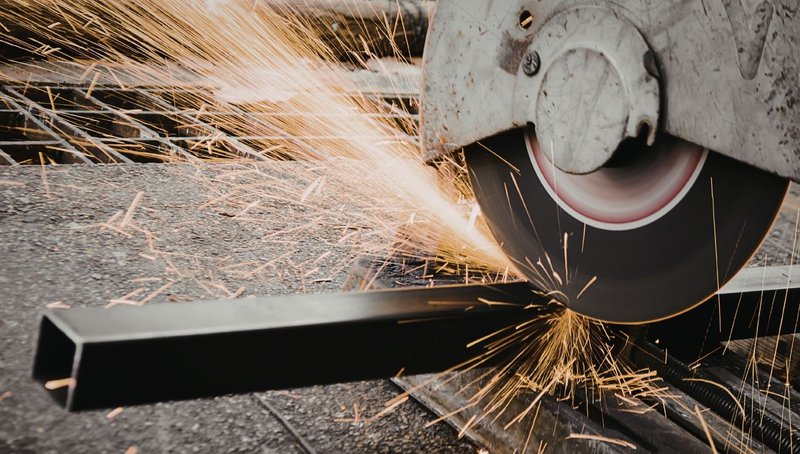
Mechanical steel tubing produced to American Society for Testing and Materials (ASTM) A513 meets tighter OD tolerances than structural tube.
Surface finish also affects downstream processing. A smoother tube surface reduces tool wear in machining and improves paint and coating adhesion. In hydraulic or pneumatic cylinder applications, surface condition directly affects seal performance and service life.
Material Properties Matched to Application Loads
Mechanical steel tubing is available across a range of grades and chemistries. This allows OEM engineers to match material properties to actual service loads rather than defaulting to over-specified stock. Low-carbon grades offer formability for parts requiring bending or swaging. Higher-carbon and alloy grades provide the yield and tensile strength needed for structural components in agricultural equipment, material handling systems, and automotive subframes.
The ASTM A513 standard covers Electric Resistance Welded (ERW) mechanical tubing in both carbon and alloy steel. It features multiple type classifications mapping to different production methods and property levels. Specifying to this standard gives procurement teams a clear, auditable basis for incoming inspection and supplier qualification.
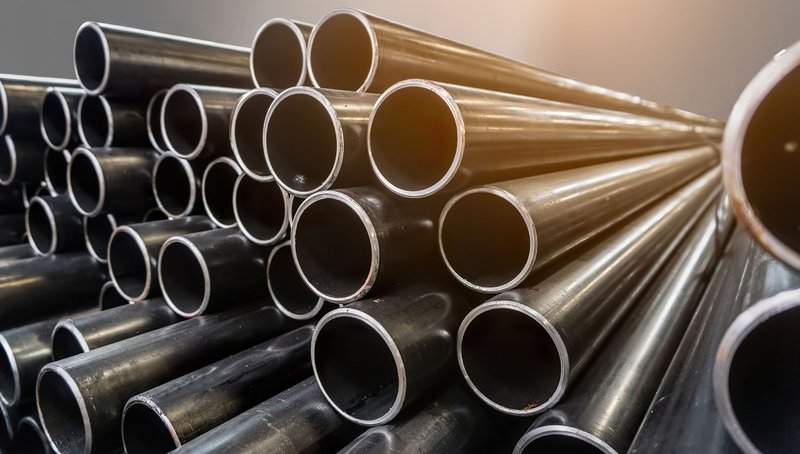
For high volume OEM programs, Bull Moose Tube provides chemical consistency as required by ASTM standards for the manufacturing of mechanical steel tube. This chemistry requirement ensures that mechanical tubing will provide the strength properties required for meeting OEM serviceability and longevity requirements as well as ensuring individual parts will exceed geometrical and dimensional tolerances. Heat-to-heat variation in carbon or manganese content changes machinability, weld behavior, and heat treat response. Bull Moose Tube's mechanical tubing is produced with material traceability and consistent mill chemistry, supporting both quality control and process stability on the manufacturing floor.
Where Mechanical Steel Tubing Creates Production Advantage
The return on specifying mechanical steel tubing over structural alternatives shows up in reduced scrap, fewer setup adjustments, and lower tooling costs across a production run. For high-volume OEM programs, those savings compound quickly.
Agricultural equipment frames, conveyor components, automotive driveline parts, hydraulic cylinder bodies, and fitness equipment structures are among the most common mechanical steel tubing applications. Each involves repetitive machining or fabrication where starting material consistency is a direct input to finished part quality.
OEM engineers who specify mechanical steel tubing correctly at the design stage avoid costly material substitutions and supplier changes later. Getting the grade, tolerance class, and surface condition right up front is faster and less expensive than engineering around an inconsistent supply.
To talk through mechanical steel tubing specifications for your production program, contact Bull Moose Tube.