


Utilizing a square steel HSS tubing system gives structural engineers and architects something that most open sections can't. It delivers equal strength in bi-axial directions from a single member. That two-axis symmetry makes it a strong fit for columns, exposed frames, canopies, and trusses. In modern building design, this structural quality also simplifies detailing and cuts the gap between structure and aesthetics.
Why Square Steel Tubing Works Well in Column and Frame Design
Hollow structural sections (HSS) in square profiles carry loads evenly across both cross-sectional axes. That even load path gives square sections a high radius of gyration in both directions.
In practical terms, it means a square column resists buckling in any primary direction without extra bracing in the weak axis plane. For multi-story frames and long-span canopy structures, that quality also cuts the number of secondary members needed to stabilize the system. Square sections carry torsional loads better since their closed shape resists twisting along the member length. In contrast, open sections like wide-flange beams need more detailing to reach the same torsional performance.

The American Institute of Steel Construction’s (AISC) 360 specification sets the design wall thickness for square HSS at 0.93 times the nominal value. That factor reflects the wall thickness tolerance in the American Society for Testing and Materials (ASTM) A500 specification, which covers most square steel tubing used in structural work.
Architectural Uses Where Square Sections Add the Most Value
Architecturally exposed structural steel (AESS) work has driven the use of square hollow sections in commercial and public buildings. Square sections produce flat, uniform faces and consistent corner radii. Those qualities create clean lines that are hard to match with built-up members or open profiles. Aesthetically speaking, exposed columns, entry canopies, and overhead frame systems all benefit from that visual consistency. Each face of a square section looks the same from any angle, so the structural shape and the design intent align without extra closure or finishing work.
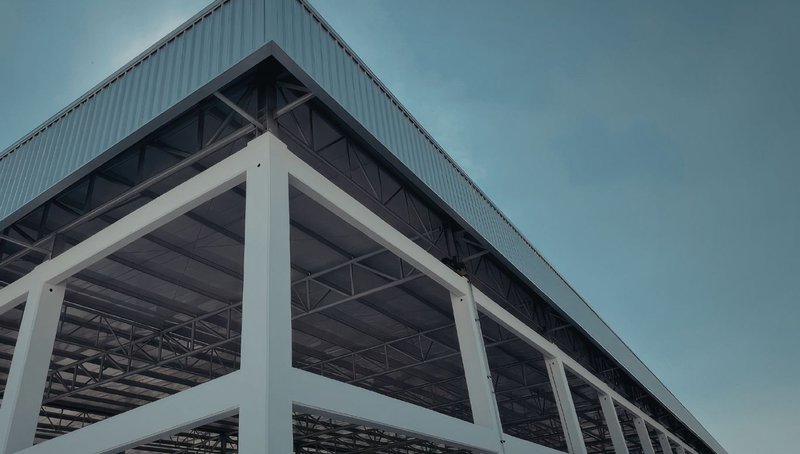
For projects where surface quality matters, square sections supplied to ASTM A500 Grade C specifications provide a solid base for paint, coating, or galvanizing. Projects with tighter surface requirements can also specify ASTM A1085, which provides tighter size tolerances and more consistent material properties.
Specifying Square Steel Tubing for Design and Procurement
Bull Moose Tube produces square steel tubing ranging from 0.5 inches to 14 inches, with wall thicknesses from 0.065 inches to 0.750 inches. That range covers light framing members through heavy structural columns in commercial and industrial work. Bull Moose manufactures to ASTM A500, ASTM A1085, CSA G40.20/G40.21, and EN 10219. That gives design teams the flexibility to choose the standard that fits their project needs.
Bull Moose is the only HSS producer in North America using both direct-form and round-to-shape manufacturing. That dual process expands the range of available sizes and wall thicknesses without custom orders or longer lead times. Seven US plants also support a steady supply across multiple regions, which matters when delivery timing affects steel erection.
Structural work on square sections depends on accurate size data. Bull Moose's technical documentation covers section properties across a full range – supporting architectural aesthetic needs, planning, structural engineering and early connection design.
If square steel tubing is part of your next project, Bull Moose Tube's team can confirm size options, review specs, and support your procurement plan. Contact us to learn more.