


Borings don't always tell the full story. When site conditions diverge from the geotechnical survey, foundation engineers need a pile type that adjusts to real ground conditions rather than based on only a few borings. Driven steel pipe piling provides engineers with better alternatives in the field. That's why a driven pile is tested pile and it is chosen consistently in commercial construction, heavy civil work, and marine foundations.
How Steel Pipe Piling Performs Across Variable Ground Conditions
Most pile types commit engineers to one general load path, yet pipe piling uses two. Those two paths are skin friction along the shaft and end bearing at the tip. In some soils where soft or saturated soils are encountered, or end bearing alone falls short, skin friction picks up the load.
That built-in backup makes pipe piling reliable for waterfront structures, bridge abutments, and projects where bearing depth tip predictions are uncertain. Another field advantage is that steel pipe piling also allows for splices in the field. If a geotechnical engineer determines that differing site conditions warrant more pile depth than anticipated, the pile simply can be spliced to extend to new tip elevations to meet real conditions. Unlike concrete splice constraint options, steel pipe piling allows field splicing adjustments without a going back to the fabrication plant for a complete redesign.
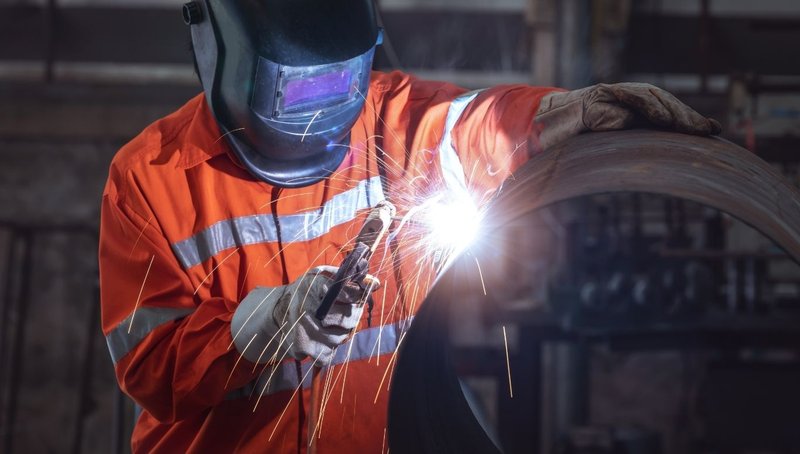
The ASTM A252/A252M-19 specification, published by ASTM International, covers welded steel pipe piles for structural foundation use. It defines three grades. Grade 2 covers standard building and bridge work. High-load jobs, including offshore platforms and heavy port structures, call for Grade 3. Grade 3/Modified applies where project demands push beyond base Grade 3 limits and higher yield stress is required. Selecting the right grade is a structural engineering decision with load capacity consequences, not a default choice made at procurement.
Matching Pipe Piling Specification to the Project Load Case
Working with accurate field soil conditions and proper testing from the beginning provides the best starting point to determine real load resistance and is the most reliable way to structurally specify pipe piling. A warehouse or bridge pier or a data center foundation may share similar pile diameters, but their axial and lateral loads may require significant wall thickness, pile lengths or yield strength differences. GEC-12, the Federal Highway Administration's (FHWA) Geotechnical Engineering Circular No. 12, gives the framework most engineers follow for load analysis and pile type selection. It also covers pile driving assessments, which matters when encountering hard driving site conditions.
The same logic applies for most any structure that requires a Deep Foundation solution. A pipe pile under a commercial building must also account for dead load, live load, and lateral forces from wind or seismic activity.
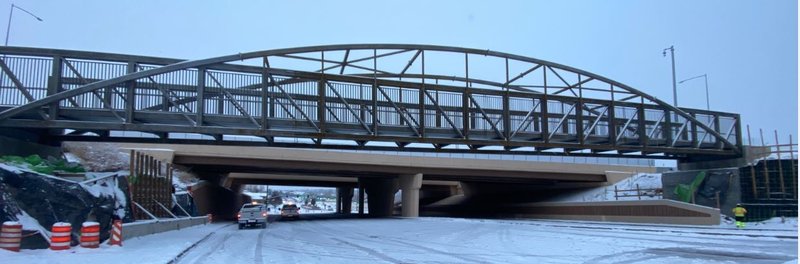
Wall thickness is also a key variable: thicker walls provide needed strength and stiffness. Driving demands also need to be considered, especially in hard driving conditions. Engineers need to determine whether it is easier to drive a smaller diameter pipe with higher yield strength which will require a thicker wall, but allows field production to beat the critical path in construction for say, a data center. Thus, the right wall thickness depends on the specific project. Bull Moose Tube produces steel pipe pile to ASTM A252 in Grade 2, Grade 3, and Grade 3/Modified. Available outside diameters run from 5.563 inches to 18 inches, with lengths to 80 feet.
Moreover, seven US plants give Bull Moose the reach to supply projects across multiple regions on reliable schedules. On large deep foundation projects where crews work to tight timelines, supply consistency matters.
Bull Moose also keeps full load and dimension data for the complete range of available sections. Reviewing those numbers against driven pile testing load demands and drive equipment requirements provides engineers a working shortlist before the spec is locked. For projects in variable soils, marine settings, or high-load commercial jobs, that preliminary geotechnical report often saves weeks downstream.
If driven deep foundation pipe piling is on the table, bring Bull Moose Tube technical expertise into the process before the spec is written. Our team can work through load requirements and confirm yield strength, grade and diameter options. We also help build a procurement timeline that keeps installation crews on schedule. Connect with our team and start the conversation with your load data.