


The American Society for Testing and Materials (ASTM) A500 is the most widely specified standard for cold-formed steel tubing in structural construction. Its grade structure and tolerance requirements deserve more attention than they typically get at the early design stage. The grade choices within ASTM A500 carry real design consequences. The tolerance rules also affect how section properties get calculated, which means the spec shapes the work well before fabrication begins.
What ASTM A500 Actually Covers
The ASTM A500/A500M specification covers cold-formed carbon steel tubing in round, square, rectangular, and special shapes. It applies to bridges, buildings, and general structural use across a broad range of project types. The standard defines three grades based on minimum yield and tensile strength.
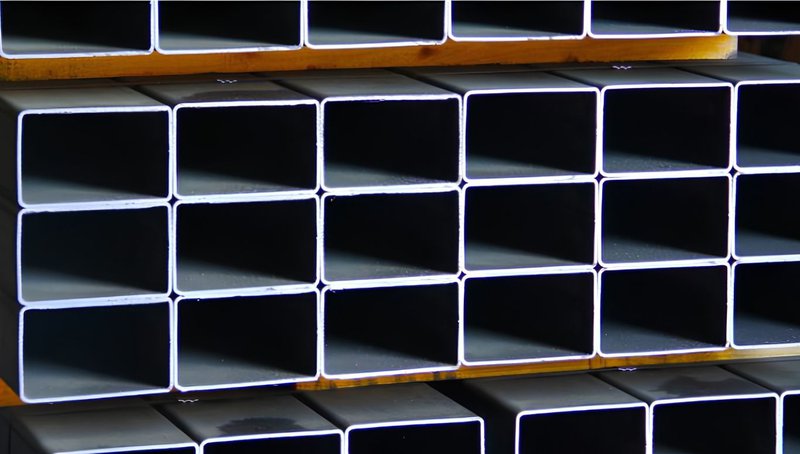
Grade A applies to round sections only. Grade B sets a minimum yield of 46 ksi and a tensile strength of 58 ksi for both round and shaped sections. Most commonly specified, though, is Grade C, with a minimum yield of 50 ksi and a tensile strength of 62 ksi across all shapes. Engineers who specify Grade B when Grade C is available may be leaving structural efficiency on the table.
How Tolerances Affect ASTM A500 Design Calculations
Tolerance requirements under ASTM A500 have practical consequences for design work. The standard allows a wall thickness tolerance of plus or minus 10 percent. That means the actual wall can be thinner than the nominal value.
For that reason, the American Institute of Steel Construction (AISC) 360 specification requires multiplying the nominal wall thickness by 0.93 when calculating section properties. That adjustment affects moment of inertia, section modulus, and compressive strength values, so it belongs in the calculation from the start. Additionally, corner radii on rectangular and square sections differ depending on the property being calculated. Slenderness ratios use a corner radius of 1.5 times the wall thickness, while workable flat dimensions use 2.25 times. Understanding these distinctions matters when checking compactness limits or calculating effective areas in connection design.
When to Specify A500 and When to Consider an Alternative
For most structural projects, ASTM A500 Grade C is the right call. It covers hollow structural sections (HSS) up to 88 inches in perimeter and satisfies AISC 360 requirements for general structural use. It's also widely available from producers across North America, which makes it the practical default for most fabricators.
In some cases, however, engineers specify ASTM A1085 instead. A1085 offers tighter tolerances, improved Charpy V-notch toughness requirements, and property ranges rather than just minimums. Those tighter tolerances also eliminate the 0.93 thickness reduction factor, giving designers more confidence in material consistency. A1085 is not as readily available, though, so confirming supplier lead times early is essential when it appears in the spec.
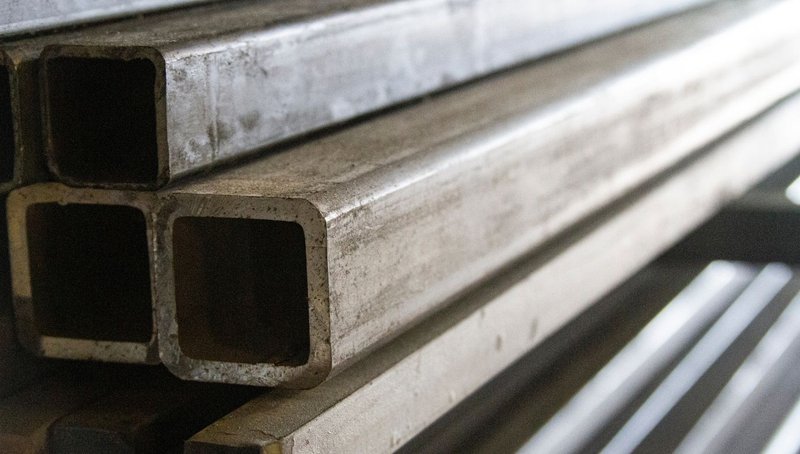
Bull Moose Tube produces HSS to both standards, manufacturing to ASTM A500, ASTM A1085, CSA G40.20/G40.21, and EN 10219. Available sizes run from 1 inch to 14 inches square, with wall thicknesses from 0.065 inches to 0.750 inches. Moreover, Bull Moose is the only HSS producer in North America using both direct-form and round-to-shape manufacturing.
That dual capability expands the range of available sizes and wall thicknesses beyond what a single-process mill can offer. The Steel Tube Institute maintains a side-by-side comparison of HSS material specifications across ASTM standards for engineers reviewing options before specifying.
Getting the Spec Right Before Procurement Begins
Choosing between Grade B and Grade C, or between ASTM A500 and A1085, is not a last-minute decision. Each choice affects size availability, lead times, and how section properties feed into structural calculations. Early-stage design decisions get easier when dimensional data is already in hand.
Bull Moose maintains full HSS sizing and specification data across the complete product range for pre-bid planning. This online calculator also lets engineers confirm dimensional values and section properties before committing to a spec. Bringing that comparison into the design process early avoids substitution conversations that slow fabrication schedules.
If your project calls for ASTM A500 HSS, reach out to Bull Moose Tube's team with your section requirements before the spec is written. We can confirm grade availability, review size options, and help keep your procurement timeline on track.