


Rectangular and square hollow structural steel sections have roughly two-thirds the surface area of a wide-flange section of comparable structural capacity. That geometric fact also has a real sustainability impact that goes beyond the material itself. Less surface to coat means less paint, less fireproofing, and less finishing work over the life of the structure. On a large project with many exposed columns or an extensive truss system, those reductions add up quickly.
Why Hollow Structural Steel Uses Less Material for the Same Load
The closed cross-section of hollow structural steel (HSS) spreads stress in all directions. That gives it a high strength-to-weight ratio for both axial and lateral loading. That efficiency means designers can often use a lighter section instead of a heavier open one to carry the same load. Less steel per element directly lowers embodied carbon, since most of a steel product's carbon footprint comes from production.
Square and rectangular HSS sections also have roughly two-thirds the surface area of open sections with similar load capacity. Since surface area drives the quantity of paint, fireproofing, and other applied finishes, using HSS cuts those inputs without changing the structural design. For architects working with exposed structural steel, that lower surface area also simplifies the finishing scope. It additionally reduces the coordination required between structural and design teams on exposed-frame projects.
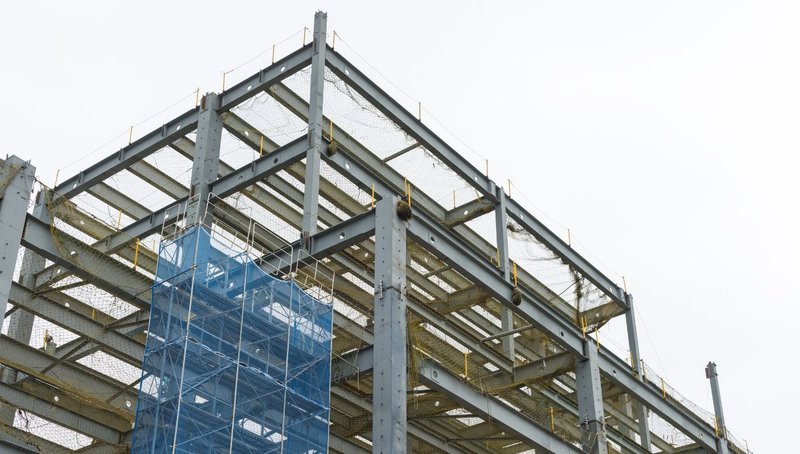
Research on optimizing HSS design from the Steel Tube Institute shows that when total material use, coating, and fireproofing are factored in, HSS offers a compelling sustainability case even when per-ton embodied carbon figures are comparable to open sections.
EPDs, Recycled Content, and the Green Building Case for HSS
Indeed, steel is infinitely recyclable without losing its structural properties. HSS produced in electric arc furnace (EAF) mills uses recycled scrap as its main input. That route also generates lower greenhouse gas emissions per ton than blast furnace production. It results in a product with high recycled content as well. Environmental Product Declarations (EPDs) make those figures verifiable. Bull Moose Tube holds an EPD certified by SCS Global Services, valid through November 2026.
The Sinton, Texas facility, for example, reports a global warming potential (GWP) of 1.12 metric tons of CO2 equivalent per metric ton of steel. By comparison, other Bull Moose facilities report figures from 1.68 to 1.91 metric tons per metric ton of product. That documented GWP therefore supports credit submissions under Leadership in Energy and Environmental Design (LEED) v4 MRc2. The Steel Tube Institute also maintains an industry-average EPD for unfabricated HSS for use during early design.
Hollow Structural Steel for Green Building Projects
Bull Moose Tube produces HSS to the American Society for Testing and Materials (ASTM) A500 and ASTM A1085. A500 Grade C is the standard specification for most structural work. A1085 also offers tighter tolerances and improved toughness requirements. It removes the 0.93 wall thickness reduction factor that applies under the American Institute of Steel Construction (AISC) 360 specification. That removal simplifies section property calculations and gives designers more confidence in material consistency.
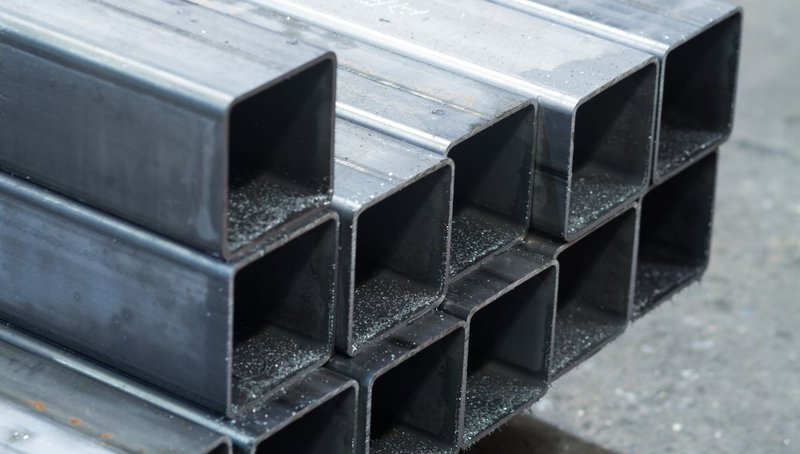
Bull Moose is the only HSS producer in North America using both direct-form and round-to-shape manufacturing. That dual process expands the range of available sizes and wall thicknesses beyond what a single-process mill can offer.
For project teams working through green building requirements, Bull Moose's sustainability data and EPD are also available on request. Start a conversation with us to learn more about HSS specifications, EPD access, or delivery options for your project.